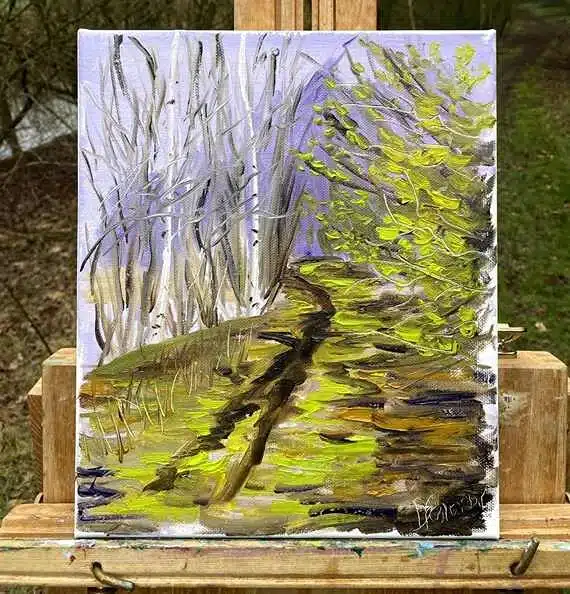
Painting Outdoors in Spring: The Complete Guide to En Plein Air Art
Art Team
June 7th, 2026
No Comments
En Plein Air: A Comprehensive Guide
Introduction: Rediscovering the Joy of Painting Outside
There’s something almost irresistible about painting outdoors — the fresh air, changing light, and direct connection to the scene before you. For centuries, artists have sought to capture the beauty of nature firsthand, but it wasn’t always possible. Until the mid-19th century, technical limitations bound most painters to the studio. With the arrival of portable paint tubes, travel easels, and a new curiosity about light and atmosphere, “en plein air” (French for “in the open air”) became a revolutionary movement.
Today, painting outdoors remains one of the most fulfilling practices an artist can pursue — especially in springtime, when landscapes reawaken and colors are at their most delicate. Whether you’re a student exploring landscape painting for the first time or a seasoned artist refining your style, this guide will walk you through the history, tools, and creative mindset that define plein air art.
I. Heritage and Evolution
1. A Brief History of En Plein Air Painting
The phrase en plein air originated in 19th-century France during the Impressionist era, but its spirit existed long before that.
2. Early Roots: Sketching in Nature
During the Renaissance and Baroque periods, artists such as Claude Lorrain and J.M.W. Turner often made outdoor sketches in graphite, chalk, or watercolor. However, these studies were almost always preparatory, used later in the studio for large oil compositions. Painting directly in oils outdoors was rare due to cumbersome materials: pigments were hand-ground, and paint dried quickly without modern mediums.
3. Romanticism and the Birth of Observation
By the early 1800s, Romantic painters like John Constable emphasized truth to nature and localized color, encouraging greater fidelity to outdoor lighting. Constable’s field studies in Suffolk — fresh, lively, and spontaneous — hinted at the plein air revolution to come.
4. The Barbizon School: Nature as Muse
In France, the Barbizon School developed around the village of Barbizon near the Forest of Fontainebleau. Artists such as Théodore Rousseau, Jean-François Millet, and Charles-François Daubigny rejected idealized landscapes in favor of real, unembellished scenes.
5. The Impressionists and the Portable Revolution
By the 1860s, new technology made plein air painting genuinely practical. Paint was finally available in metal tubes, brushes became lighter, and transportable easels (like the box easel or French easel) emerged. Artists could pack their supplies and head into the countryside.
Claude Monet famously painted the same haystack at different times of day to capture shifting light, proving how direct observation could reveal new truths about perception. Pierre-Auguste Renoir once said, “For me, a picture must be a pleasant thing — joyous and beautiful. Yes, beautiful! There are too many unpleasant things in life as it is.” That joy — raw, immediate, responsive — remains central to plein air philosophy.
6. Global Expansion
By the late 19th and early 20th centuries, plein air painting spread globally. American artists of the Hudson River School and California Impressionists brought the tradition to new landscapes — vast, bright, and untamed. Today, plein air festivals and competitions thrive worldwide, celebrating both individual expression and shared craftsmanship.
II. Preparation and Equipment
1. Why Spring Is Ideal for Plein Air Painting
Spring embodies connection, renewal, and transition — all inspiring qualities for artists. Its unique conditions make it a favorite season for outdoor painting.
Dynamic Light: Spring sunlight changes rapidly as clouds drift and days lengthen, providing endless opportunities to study transient effects.
Fresh Color Palette: From tender greens of new foliage to soft lilac blooms, spring offers subtle tonal relationships rarely found in other seasons.
Moderate Temperatures: Unlike summer’s intensity or winter’s chill, spring provides comfortable working conditions for extended outdoor sessions.
Symbolic Resonance: Spring’s theme of rebirth and growth parallels artistic discovery. Each painting session becomes an act of renewal — a dialogue between you and nature.
2. Essential Gear for Painting Outdoors
A successful plein air session begins with preparation. The right tools reduce frustration and allow you to focus on creativity.
3. Painting Setup
Easel: A lightweight French easel or pochade box (a compact box that mounts to a tripod) provides stability. For travel, aluminum tripods with quick-release mounts are ideal.
Surface: Panels or small canvases are easy to carry and less affected by wind. Pre-toning them with a mid-value wash (burnt sienna or neutral gray) helps unify colors.
Palette: Limit your palette for efficiency. Consider titanium white, ultramarine blue, cadmium yellow light, yellow ochre, alizarin crimson, and burnt umber — enough to mix most natural hues.
4. Brushes and Mediums
Bring a selection of bristle and synthetic brushes for different textures. Round and flat brushes in a few sizes give flexibility. If using oils, carry a small container of odorless mineral spirits and a rag. For acrylics, bring a spray bottle to keep paints moist. Watercolorists should carry a refillable brush pen and compact palette.
5. Personal Equipment
Comfort directly affects creativity. Don’t neglect the essentials: Hat and sunscreen, lightweight stool or camp chair, layered clothing for variable weather, portable water bottle, and trash bags for packing out waste.
6. Technology and Extras
Some artists use tablets or phones to photograph scenes, record time-lapse videos, or track lighting changes. While technology can enhance workflow, avoid overreliance — your direct perception remains irreplaceable.
III. Technique and Artistry
1. Setting Up Your Location
Spring conditions can change quickly. Choose a location that offers both visual interest and physical comfort.
2. Scouting Tips
Visit spots during different times of day to see how light alters the landscape. Look for compositions that invite structure: a winding path, a tree framing the horizon, or reflective water that breaks up space. Avoid overcrowded areas unless urban energy inspires you.
3. Composition Considerations
Simplify complex scenery. Start by squinting — this flattens values and highlights main shapes. Think of the landscape as a grouping of masses rather than details. Decide your focal point before beginning, and ensure lines and movement lead the eye toward it.
4. Capturing the Spirit of the Scene
Plein air painting isn’t merely about replicating what you see; it’s about interpreting your sensory experience authentically.
5. Observation Over Imitation
The most successful outdoor painters train their eyes to see relationships — how one color affects another, how light shifts tone, how air softens edges. Instead of “naming” colors (“that tree is green”), observe relative warmth, saturation, and value: is it a warm green next to a cooler one?
6. Working Quickly
Light changes every minute. Corot reportedly advised students to finish the essence of a painting within two hours. Instead of laboring over a single passage, move across the entire canvas, blocking in the big shapes before detail.
7. Embracing Imperfection
Outdoor conditions rarely align perfectly — wind, bugs, shifting light, and curious onlookers test your patience. Learn to treat interruptions as part of the process. That unplanned brushstroke may capture exactly the spontaneity you sought.
8. Techniques for Spring Landscapes
8.1. Capturing Spring Light: Use a warm underpainting to reflect the season’s glow. Spring light has a cool bias (bluish tones), so warming underlayers with subtle oranges or siennas creates balance. Avoid pure white highlights — mix a hint of color for natural luminosity.
8.2. Rendering Foliage and Blossoms: New leaves possess translucency. Mix greens with more yellow than blue and maintain variation: distant greens lean bluer, closer ones warmer. For blossoms, suggest color clusters rather than individual petals.
8.3. Painting Atmospheric Depth: To create distance, lighten values, reduce contrast, and cool colors as they recede — an effect known as aerial perspective. Spring’s mist and humidity enhance this depth naturally.
IV. Overcoming the Elements
1. Managing Changing Conditions
Spring’s beauty comes with unpredictability. A clear morning can turn damp and gray in minutes.
Wind: Use clips to secure paper. For panel work, mount boards firmly with tape or clamps.
Rain: Keep a compact umbrella designed for plein air setups; some attach directly to your easel.
Lighting shifts: Take a reference photo early in the session to preserve shadows and light direction.
Temperature changes: Rapid temperature drops affect paint consistency. Adjust with more medium for smooth flow.
2. Overcoming Common Challenges
Challenge 1: The light shifts too fast. Solution: Begin with thumbnail sketches to map key shadows quickly, committing early to one lighting scenario.
Challenge 2: Colors appear wrong outdoors. Solution: Remember that outside brightness skews color perception. Your painting may appear darker indoors — plan to slightly lighten your palette.
Challenge 3: People interrupt your work. Solution: A friendly “Thanks, I’m in the middle of a timed study!” works wonders. Most viewers appreciate the gentle boundary.
V. Beyond the Field
1. From Field Study to Finished Painting
Many artists use plein air sketches as references for larger studio works. When transitioning, resist the temptation to over-perfect. Keep the freshness of your outdoor impressions alive.
1.1. Reviewing Field Notes: When back in your studio, jot quick reflections before memory fades: time of day, mood, colors that stood out, or emotional associations.
1.2. Scaling Up: When enlarging a plein air study, retain its spontaneity. Use broad, energetic brushwork in early layers and let color harmonies echo real-light relationships captured outdoors.
2. The Mental and Emotional Benefits of Painting Outside
Plein air painting isn’t only a technical exercise — it’s a meditative experience. Numerous artists describe the act as grounding and restorative.
Mindfulness in practice: Focusing your senses on sound, texture, and color cultivates present awareness.
Stress reduction: Studies show that time outdoors lowers cortisol and boosts creativity.
Connection to place: Painting specific locales builds personal ties to landscapes that might otherwise pass unnoticed.
3. Community and Modern Plein Air Movements
Joining others for outdoor painting sessions can be incredibly motivating. Plein air societies, online communities, and local meetups offer camaraderie and shared growth. These gatherings often emphasize environmental appreciation. Many plein air artists today champion sustainability — using eco-friendly paints, reusing panels, and minimizing chemical runoff.
4. Advanced Practice: Building a Cohesive Plein Air Series
Once comfortable with single studies, try developing a cohesive body of plein air work. Select a consistent location and revisit it throughout the spring season, documenting how light evolves. Vary time of day — morning mist, midday bloom, twilight calm — to reveal changing moods. Limit format and palette to unify the series visually.
5. Staying Inspired
In plein air painting, progress isn’t measured by perfect outcomes but by deepening perception. Each session trains your eye to see more — the subtleties of shadow temperature, the rhythm of tree branches, the harmony between sky and ground. Keep a seasonal journal: note which colors dominate certain weeks, or how morning dew shifts focus.
Struggling to pick between watercolor, acrylic, or oil? Learn how drying time, control, and personality traits like patience and pace determine which paint medium is the best fit for you.
Learn what linseed oil does in oil painting, the different types available, how to use it safely with the fat-over-lean rule, and when to keep your mixtures simple.
Oil Painting Curriculum: 10 Projects for Beginners 1. Getting Started: Why Projects Beat Theory Reading about color theory and brush types has value, but confidence with oils really comes from…
Tired of waiting 6–12 months to varnish oils? Learn how modern synthetic varnishes let you safely finish oil paintings in weeks, not months. Includes timing, products, application steps, and preservation…
Discover how artist varnish protects oil and acrylic paintings from dust, UV light, and aging. Learn when and how to varnish, gloss vs satin vs matte, removable varnishes, and long‑term…
Want to paint with oils without turpentine or harsh thinners? Explore non‑toxic studio strategies, solvent‑free mediums, water‑mixable oils, natural oils for brush cleaning, and ventilation tips for a safer painting…