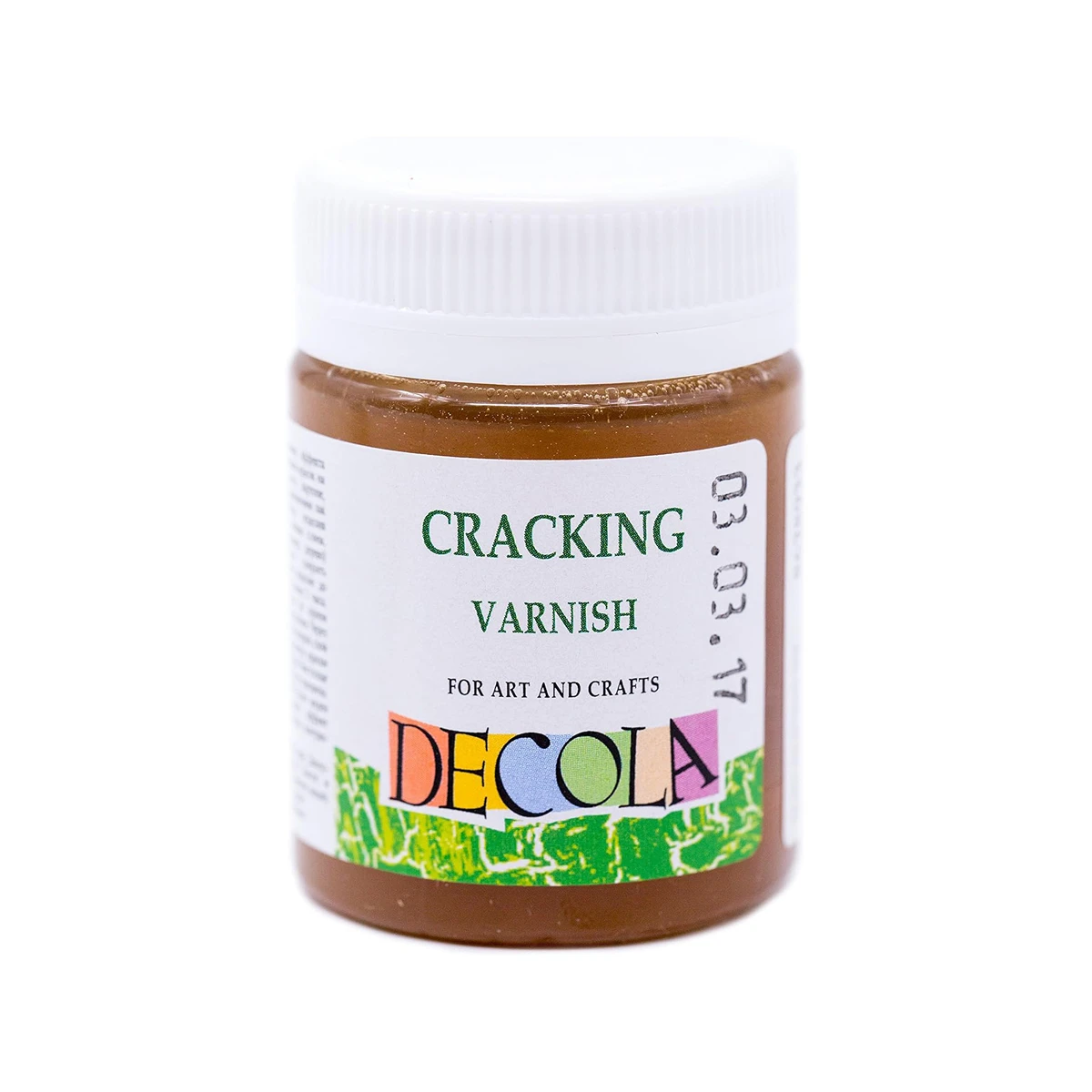
Decola Crackling Varnish: Professional Medium for Antique Effect Generation
The Decola Crackling Varnish is a sophisticated, water-based medium meticulously engineered to induce controlled, aesthetic cracking (craquelure) in painted surfaces, imparting an authentic, aged, or distressed appearance to decorative art and craft projects. Designed to facilitate a classic antique aesthetic, this varnish interacts with paint layers to create a visually complex, spider-web-like network of fine fissures, transforming smooth finishes into rich, textured, vintage-inspired surfaces.
Key Features and Artistic Benefits
- Controlled Craquelure Creation: Formulated to produce precise, decorative cracking that mimics the natural weathering process of historical oil paintings, aged lacquerware, or antique ceramics.
- Water-Based Formulation: Offers a safe, low-odor alternative to traditional solvent-based crackle mediums, ensuring a cleaner, more manageable studio environment without the need for aggressive ventilation.
- Predictable Structural Response: Provides consistent, reliable crack patterns when used in conjunction with water-based acrylic paints, allowing artists to plan and execute specific aesthetic results with confidence.
- Versatile Decorative Application: Ideal for a broad spectrum of projects, including furniture upcycling, decorative frames, jewelry boxes, and mixed-media art pieces seeking a weathered, high-character finish.
- Compact 50 ml Studio Volume: The 50 ml container provides sufficient material for significant decorative surface coverage, making it an essential addition to any studio specializing in faux-finish or restoration-style art.
Application and Usage Guidelines
- Surface Preparation: Ensure the substrate is clean, dry, and primed if necessary. Apply a base coat of acrylic paint (the color of which will appear within the cracks) and allow it to dry completely.
- Application of Medium: Apply a uniform layer of Decola Crackling Varnish over the base coat. The thickness of this layer will influence the crack size: a thinner layer produces finer, tighter cracks, while a thicker application results in larger, more dramatic fissures.
- Activating the Effect: Once the varnish has dried to a tacky, "touch-dry" state (but is not fully cured), apply a contrasting top coat of acrylic paint. **Important:** Apply the top coat with as few brushstrokes as possible to avoid overworking the medium, which can disrupt the crack formation process.
- Curing Phase: As the top coat dries, it will pull against the varnish layer, revealing the base coat through the developing network of cracks. Allow the piece to cure fully in a dust-free environment for at least 24 hours to achieve maximum structural stability.
- Finishing: Once fully cured, the distressed surface can be sealed with a clear acrylic varnish or wax for long-term protection against moisture and mechanical wear.
Technical Specifications
- Product Identification: Decola Crackling Varnish
- Container Fluid Volume: 50 ml (milliliters)
- Chemical Base: Water-borne synthetic resin emulsion
- Cured Finish Characteristic: Transparent, crack-inducing medium layer
- Curing Architecture: Ambient air-dry; crack development occurs during top-coat drying phase
- Substrate Compatibility: Wood, mdf, cardboard, plaster, primed canvas, and treated ceramics
- Application Tools: Soft flat synthetic brushes or high-density foam rollers
- Cleanup Protocol: Cleans up effortlessly with warm water and soap while wet; permanent once the crackling process is locked in by the final top coat and curing